

What Is an Employee Morale Survey?
An employee morale survey is a short, recurring questionnaire that measures how your team feels about their work, their manager, and their future at the company. Unlike an annual engagement survey, it runs monthly or quarterly and tracks sentiment over time — so you see morale falling before it turns into turnover.
You can’t fix what you can’t see. And when it comes to employee morale, most leaders are flying blind until it’s too late—until turnover spikes, productivity tanks, or your best people quietly disengage and start job hunting.
Surveys get a bad rap. They’re often treated as checkbox exercises that generate nice reports but change nothing. That’s not a survey problem. That’s an action problem.
Done right, employee morale surveys give you early warning signals before small frustrations become resignation letters. They surface issues managers miss in day-to-day conversations. They tell you whether your engagement initiatives are actually working or just burning budget.
The catch? You have to ask the right questions. Vague questions get vague answers. Leading questions get the answers you want to hear instead of the truth. And surveys that never lead to visible change teach employees that their feedback doesn’t matter—which tanks morale even further.
Here are 30 questions that actually surface actionable insights, organized by what they measure and why it matters.
Why Morale Surveys Matter (When Done Right)
Before diving into questions, let’s be clear about what we’re measuring and why.
Morale isn’t the same as engagement, though they’re related. Morale is how employees feel about their work environment day-to-day—their emotional state, their sense of belonging, their belief that things are going well or poorly. Engagement is whether they’re invested in outcomes and willing to go beyond minimum requirements.
Low morale eventually kills engagement. People don’t stay invested in work that makes them miserable.
Gallup research shows that employees who are not engaged cost their company the equivalent of 18% of their annual salary. Multiply that across a 200-person call center with 30% disengagement, and the math gets painful fast.
But here’s what most companies miss: surveys only work if employees believe their feedback leads somewhere. When people see their input driving real change, they’re 2.7 times more likely to be highly engaged, according to Quantum Workplace. When surveys disappear into a void? Trust erodes and participation drops.
The questions below are designed to generate specific, actionable feedback—not vague sentiment data that looks good on slides but changes nothing.
Questions About Day-to-Day Work Experience
These questions measure how employees feel about the actual work they do every day. This is where morale lives or dies.
- Do you have a clear understanding of what’s expected of you in your role?
Unclear expectations are morale killers. When people waste energy guessing what success looks like, frustration builds. Gallup identifies this as the foundational element of engagement—without it, everything else suffers.
- Do you have the tools and resources you need to do your job well?
Nothing tanks morale faster than feeling set up to fail. This question surfaces operational issues that leadership might not see.
- How often do you feel overwhelmed by your workload?
Chronic overwhelm leads to burnout. This question distinguishes between healthy challenge and unsustainable pressure.
- Do you feel your skills are being used effectively?
Underutilization frustrates high performers. People want to contribute meaningfully, not just fill a seat.
- How would you rate the level of stress you experience at work?
Direct question, direct answer. The combined cost of stress-related absenteeism, presenteeism, and turnover hits roughly $12,000 per employee annually, according to Harvard Business Review.
- Do you feel you have enough autonomy in how you approach your work?
People who feel trusted to make decisions invest more in outcomes. Micromanagement destroys morale even when it’s well-intentioned.
Questions About Recognition and Feedback
Recognition is one of the most powerful morale drivers—and one of the most neglected. Only 23% of employees strongly agree they get the right amount of recognition, according to Gallup. Those who do? Five times more likely to be engaged.
- When did you last receive recognition for your work?
This question reveals recognition frequency gaps. If most people can’t remember recent recognition, you have a problem.
- Do you feel your contributions are valued by your team?
Peer recognition matters as much as manager recognition. This surfaces whether people feel seen by colleagues.
- Do you feel your contributions are valued by leadership?
Different question than the one above. Someone can feel valued by teammates but invisible to leadership—or vice versa.
- How often do you receive feedback that helps you improve?
Feedback frequency directly impacts engagement. Employees are 3.6 times more likely to be motivated when they receive daily feedback compared to annual reviews. An employee performance dashboard can help close this gap by providing continuous visibility into performance.
- Is the feedback you receive specific enough to act on?
Generic “good job” doesn’t move the needle. This question distinguishes between meaningful feedback and empty praise.
- Do you feel comfortable giving feedback to your manager?
One-way feedback cultures breed resentment. If people can’t speak up, problems fester.
Questions About Manager Relationship
The manager relationship is the single biggest factor in day-to-day morale. People don’t leave companies—they leave managers.
- Does your manager seem to care about you as a person?
This isn’t soft. It’s predictive. Employees who feel their manager cares are dramatically more likely to stay and perform.
- How often do you have meaningful one-on-one conversations with your manager?
“Meaningful” is the key word. Check-the-box meetings don’t count.
- Does your manager recognize your strengths and help you develop them?
Development-focused management builds loyalty. Neglecting growth signals that employees are interchangeable.
- Do you trust your manager to have your back?
Trust is the foundation. Without it, nothing else works.
- Does your manager communicate expectations clearly?
This overlaps with question 1 but specifically isolates the manager’s role. Sometimes unclear expectations come from organizational chaos, not manager failure.
- How comfortable are you bringing problems to your manager?
Psychological safety determines whether issues surface early or fester until they explode.
Questions About Team Dynamics and Culture
Morale is partly individual and partly collective. A toxic team environment drags everyone down regardless of individual circumstances.
- Do you feel like you belong on your team?
Belonging is a fundamental human need. Its absence creates isolation that erodes morale over time.
- How would you describe team morale overall?
Sometimes people are hesitant to complain about their own situation but will accurately describe the team climate.
- Do team members support each other when workloads get heavy?
This reveals whether you have a team or just a group of individuals working near each other.
- Are conflicts on your team addressed constructively?
Unresolved conflict poisons morale. This question surfaces whether issues get handled or ignored.
- Do you feel comfortable being yourself at work?
Authentic environments support wellbeing. If people feel they have to perform a version of themselves, exhaustion follows.
Questions About Growth and Future
People need to believe they’re going somewhere. When the future feels like more of the same, morale stagnates.
- Do you see a future for yourself at this company?
Direct question about retention risk. If the answer is no, you’re on borrowed time.
- Do you feel you’re learning and growing in your role?
94% of employees would stay longer at companies that invest in their development, according to Clear Company research. An employee gamification platform can make progress visible and create clear advancement tracks.
- Do you understand what’s required to advance in your career here?
Unclear career paths frustrate ambitious employees. If promotion feels political or arbitrary, top performers leave.
- Has your manager discussed your career goals with you in the past six months?
Career conversations signal investment. Absence signals indifference.
Questions About Organizational Trust
These questions measure whether employees trust leadership and believe in the company’s direction.
- Do you believe leadership communicates openly and honestly?
Trust in leadership shapes how employees interpret everything else. Distrust poisons even good news.
- Do you understand how your work contributes to company goals?
Nearly 70% of employees prefer working for organizations with clear purpose, according to Harvard Business School research. Effective employee engagement strategies bridge the gap between daily tasks and organizational mission.
- Would you recommend this company as a good place to work?
The ultimate summary question. If people wouldn’t recommend you, they’re probably not staying long either.
How to Use These Questions Effectively
Asking the right questions is step one. What you do next determines whether the survey builds or breaks trust.
Don’t survey annually and call it done. Annual surveys capture a snapshot that’s already outdated by the time you analyze it. Leading organizations combine periodic deep surveys with more frequent pulse checks. Employee engagement tools can provide continuous visibility into morale indicators without survey fatigue.
Actually respond to what you learn. Nothing destroys survey credibility faster than asking for feedback and doing nothing with it. Even if you can’t fix everything, acknowledging what you heard and explaining what you’re doing (or why you can’t) maintains trust.
Share results transparently. Employees who took time to respond deserve to see what you learned. Hiding results suggests you didn’t like the answers.
Look for patterns, not just averages. An average morale score of 7/10 might hide that half your team is miserable while the other half is thriving. Dig into the distribution, not just the mean.
Segment by team, tenure, and role. Morale issues are rarely uniform. New hires might feel differently than veterans. Sales might struggle while support thrives. Aggregated data hides actionable insights.
Moving From Surveys to Systems
Surveys tell you where you stand. They don’t fix anything by themselves.
The challenge for most operations leaders is translating survey insights into sustained change—especially in high-turnover environments where you’re constantly rebuilding culture with new people.
Companies that focus on their people’s performance are 4.2 times more likely to outperform peers, with 30% higher revenue growth, according to McKinsey. But capturing this requires moving beyond periodic measurement to continuous systems that embed recognition, feedback, and growth into daily work.
That’s the shift from surveys as events to engagement as infrastructure.
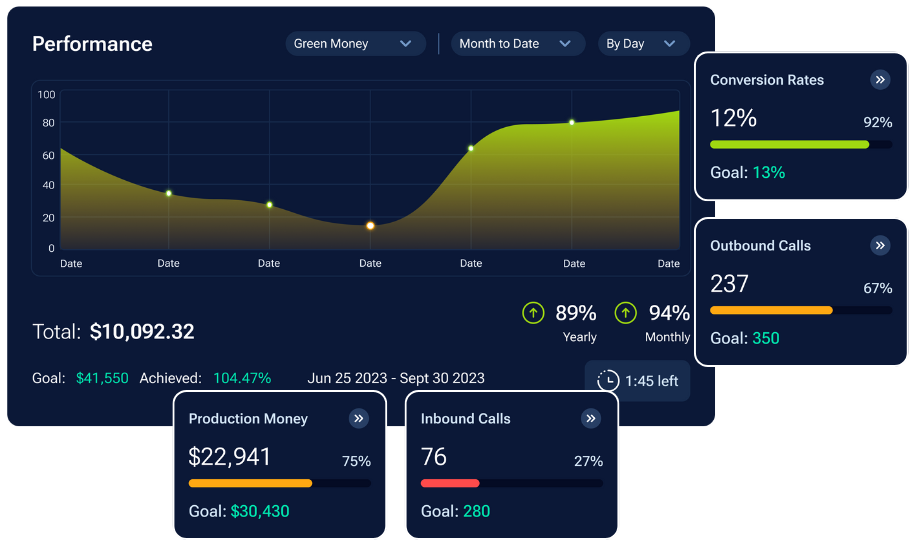
Employee gamification software approaches this by applying behavioral science to create real-time feedback loops, visible progress tracking, and recognition systems that don’t depend on manager bandwidth. Instead of hoping managers remember to recognize good work, the system ensures it happens consistently.
For operations environments specifically, workforce retention strategies address the root causes that morale surveys reveal—the gap between what employees need and what they’re actually getting.
The Bottom Line
Morale surveys work when they lead to action. They backfire when they become empty rituals.
The 30 questions above are designed to surface specific, actionable insights across the dimensions that actually drive morale: daily work experience, recognition and feedback, manager relationships, team dynamics, growth opportunities, and organizational trust.
But questions are just the start. The organizations that build high morale don’t just measure well—they act on what they learn and create systems that sustain engagement over time.
Ready to move beyond surveys to continuous engagement? Schedule a demo to see how behavioral science-driven performance management keeps morale visible and actionable every day.