
Here’s something most HR leaders won’t admit: traditional benefits packages are failing at retention.
Many companies offer competitive health insurance, solid 401(k) matching, and generous PTO. Yet turnover remains stubbornly high. Something fundamental is broken.
The problem isn’t necessarily the quality of individual benefits. It’s that most organizations treat benefits like a compliance checklist. Health insurance? Check. Dental? Check. Retirement plan? Check. Then they’re surprised when their best people still leave.
Gallup found that companies with highly engaged teams see 51% less turnover than those with disengaged employees. That gap isn’t about better dental coverage. It’s about understanding what actually drives human behavior at work.
After analyzing dozens of call centers and high-pressure sales environments, a pattern emerges: employees don’t leave because the benefits aren’t good enough. They leave because the day-to-day experience of working there feels unrewarding, disconnected, and disengaging.
Let’s examine the benefits that actually move the needle on retention. Not the ones that look impressive in job postings, but the ones that fundamentally change how people experience work every single day.
1. Recognition That Actually Happens (Not Once a Year)
Let me tell you what doesn’t work: the annual performance review where your manager finally tells you that thing you did eight months ago was great. By then, you’ve forgotten about it, and honestly, so have they.
Here’s what does work: telling someone they crushed it the same day they crushed it.
This isn’t touchy-feely management advice. Gallup found that employees are 3.6 times more likely to feel motivated when they get daily feedback instead of waiting for their annual review. And get this: 80% of employees who received meaningful feedback in the past week are fully engaged at work.
The behavioral science here is straightforward. Your brain releases dopamine when you get recognized for an achievement. That dopamine hit reinforces the behavior that earned the recognition. But here’s the catch: the feedback loop has to be fast. Recognition that comes weeks or months later? Your brain doesn’t connect it to the original behavior anymore.
Most managers know they should recognize people more often. The problem is they’re drowning in spreadsheets and back-to-back meetings. They can’t physically give real-time feedback to 50+ team members.
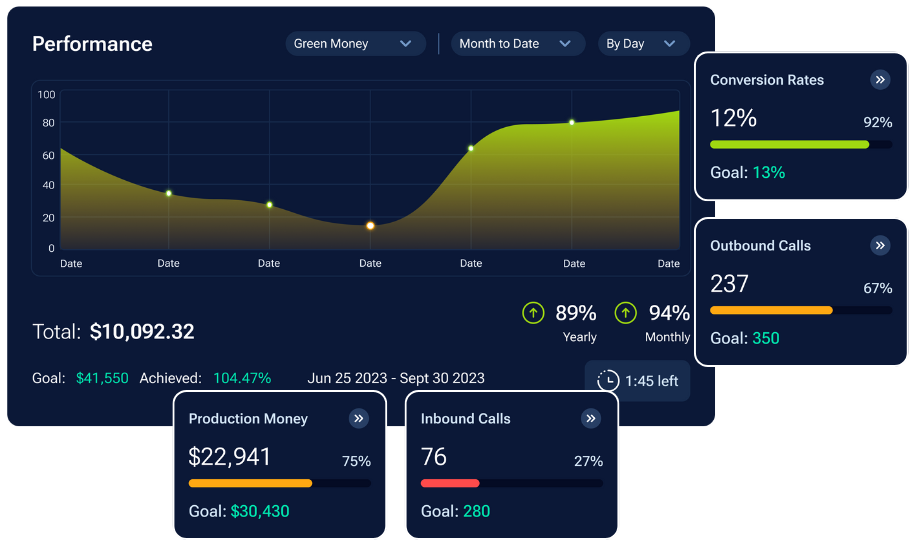
That’s where tools like an employee performance dashboard change the game. When managers can see performance in real time, they can actually coach in real time. Behavioral science-driven platforms like ZIZO replace backward-looking spreadsheets with live performance data and automated coaching prompts, enabling managers to recognize achievements as they happen rather than weeks later.
According to Zippia Research, 69% of employees say they’d work harder if they felt recognized through feedback. And companies that invest in regular feedback have 14.9% lower turnover than those that don’t.
The math is simple: more recognition = more dopamine = more motivation = people actually stick around.
2. Clear Career Development Pathways
One of the fastest ways to lose credibility with employees is to promise “growth opportunities” when no one has been promoted in three years.
Employees can identify inauthentic career development immediately. They’ve sat through presentations about “investing in your future” while being assigned the same responsibilities they had last year.
Genuine career development requires two elements: visible progression and meaningful skill building.
McKinsey found that companies focusing on performance development are 4.2 times more likely to outperform their peers, with 30% higher revenue growth on average. This isn’t about being generous to employees. It’s about recognizing that people who see a future at your company don’t spend their time searching for the next opportunity.
What makes the difference:
Transparent promotion criteria. Replace vague promises of advancement with specific, measurable requirements. Employees should know exactly what performance metrics and competencies are required to reach the next level.
Regular career conversations. Career development discussions shouldn’t happen only during annual reviews. Monthly check-ins where managers ask “where do you want to be in 18 months and what steps do we need to take to get you there?” create accountability and direction.
Substantive training programs. Move beyond compliance videos to training that builds real skills. Conference attendance, certification sponsorship, and cross-functional shadowing opportunities demonstrate genuine investment.
The reality is that most people don’t quit jobs. They quit stagnation. When you can show someone a credible path from their current position to where they want to be, retention improves dramatically.

3. Strategic Gamification Systems
Let’s address a common concern: most workplace gamification implementations fail to deliver results.
The issue isn’t with gamification as a concept. It’s that many organizations implement superficial badge systems for routine tasks like logging into the company portal, which employees correctly perceive as trivializing their work.
Effective gamification taps into fundamental neurological reward pathways. Well-designed achievement systems trigger dopamine release similar to meaningful accomplishments in other contexts, creating genuine motivation.
Harvard Business Review found that 69% of employees are more likely to stay with a company for 3+ years when gamification is properly integrated. The key word is “properly.” This isn’t about novelty. It’s about creating clear goals, immediate feedback, and measurable progress.
What distinguishes effective gamification:
Inclusive competition models. Poor gamification creates one winner and dozens of demotivated losers. Effective systems allow individuals to compete against their own performance baselines. Both top performers and developing employees should experience consistent progress.
Meaningful rewards. If recognition points don’t translate to tangible outcomes like advancement opportunities, increased visibility, or rewards, employees quickly recognize them as valueless.
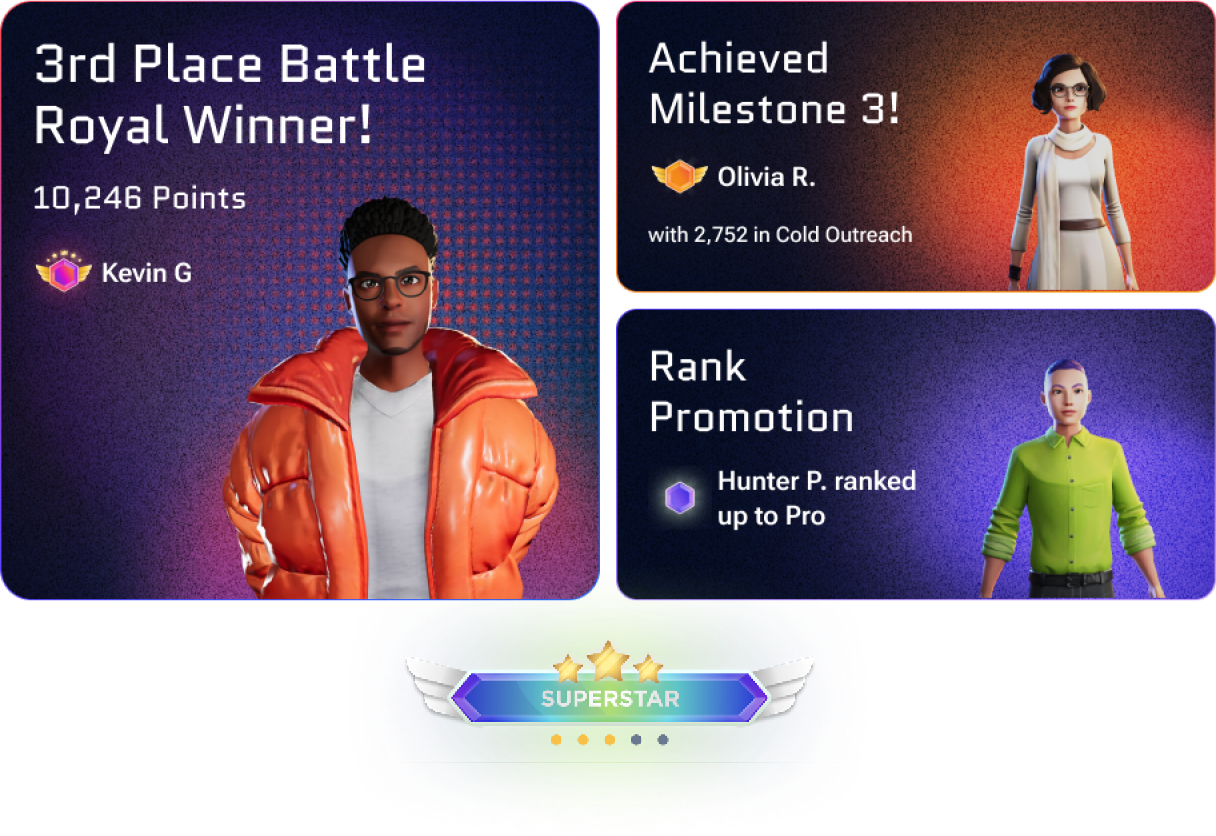
Adaptive challenge systems. A gamification platform that assigns identical challenges to all employees ignores individual skill levels. An employee gamification platform should adjust difficulty based on performance data, maintaining engagement without creating overwhelm or boredom. ZIZO’s approach to this creates personalized achievement pathways where a top performer and a new hire can both experience daily wins tailored to their current skill level.
For sales organizations, sales gamification software can transform quota achievement from quarterly pressure into daily progress. Instead of a single massive goal, employees work toward smaller, achievable milestones that build toward larger objectives.
Research from Glassdoor shows that 81% of employees who received recognition and rewards felt motivated to work harder. The critical factor is consistency. Quantum Workplace found that employees who believe they’ll be recognized are 2.7 times more likely to be highly engaged.
Effective gamification removes ambiguity from recognition. The criteria are transparent. The feedback is immediate. The rewards are predictable. This isn’t manipulation. It’s applying behavioral science to create motivating work environments.
4. Workplace Flexibility as Standard Practice
Return-to-office mandates continue to face resistance across industries, and the data supports employee preferences for flexibility.
Flexibility has evolved from a competitive differentiator to a baseline expectation. Organizations resisting this shift face significant talent acquisition and retention challenges, particularly when competitors offer remote or hybrid arrangements.
What employees value most is autonomy over when and where they complete their work. This aligns with self-determination theory, which identifies autonomy as a core psychological need driving intrinsic motivation. When employees feel micromanaged or constrained by arbitrary policies, particularly when their roles don’t require physical presence, engagement declines measurably.
Effective flexibility programs include:
Hybrid or remote work options. Allow employees to choose arrangements that optimize their productivity. Some individuals thrive in office environments while others perform better remotely. Both preferences are valid.
Flexible scheduling. If an employee is most productive from 6 AM to 2 PM, requiring them to remain until 5 PM produces diminishing returns.
Results-based evaluation. Assess output and outcomes rather than hours logged or physical presence. This shift requires different management approaches but produces better performance data.
The benefits extend beyond retention. Organizations gain access to geographically diverse talent pools and see productivity improvements when employees aren’t spending substantial time commuting.
The key is authenticity. Organizations that officially offer flexibility but create cultural pressure against using it undermine both the policy and employee trust.
5. Comprehensive Wellness Support
Discounted gym memberships and fresh fruit in break rooms don’t constitute comprehensive wellness programs.
Effective wellness initiatives recognize that stress and burnout directly impact organizational performance. Harvard Business Review calculated that highly stressed employees cost an average of $12,000 per year in lost productivity through absenteeism, presenteeism, and eventual turnover.
Meaningful wellness support includes:
Mental health resources. Professional counseling services should be accessible without stigma. Normalizing mental health support as part of standard benefits reduces barriers to utilization.
Sustainable workload management. Wellness programs cannot compensate for chronic understaffing. When teams are consistently overwhelmed, meditation apps provide minimal benefit. The fundamental issue is structural.
Genuine time-off policies. Unlimited PTO policies often backfire because employees take less time off due to unclear norms. Mandatory minimum vacation requirements with cultural support for their use prove more effective.
Organizations that successfully implement wellness programs create environments where employees can acknowledge challenges without career consequences. This requires leadership modeling and cultural reinforcement beyond policy statements.
6. Compensation That Doesn’t Insult People’s Intelligence
Let’s be blunt: if you’re paying below market rate, nothing else on this list matters.
You can gamify all you want. You can offer yoga classes and career development plans. But if your competitor is paying 20% more for the same role, your best people will leave.
This isn’t about being the highest payer. It’s about being fair. Employees constantly compare what they put in versus what they get out. When that ratio feels off, resentment builds fast.
What matters:
Market-competitive base salaries. Not “competitive” according to 2019 data. Actually competitive today.
Transparent pay structures. Secret salary ranges breed suspicion and inequity. Open ranges build trust.
Performance bonuses that are actually achievable. Don’t dangle incentives that only 2% of employees will ever hit. That’s demotivating, not motivating.
The bottom line: competitive pay won’t guarantee retention, but unfair pay will guarantee turnover.
7. Manager Development and Coaching Capability
Here’s a finding that should concern every executive: Gallup research shows that managers account for 70% of the variance in employee engagement.
This means that when managers lack essential skills, no amount of benefits investment can compensate. Conversely, skilled managers can significantly improve retention even with average benefits packages.
The challenge is systemic. Most individuals are promoted to management based on their individual contributor performance, not their demonstrated ability to coach, develop, and provide effective feedback to others.
Organizations often compound this by assigning unrealistic spans of control, expecting single managers to effectively develop 30+ direct reports while maintaining their previous responsibilities.
Companies that invest strategically in management capability see substantial returns. McKinsey found that feedback-focused companies are 1.3 times more likely to outperform competitors in both talent retention and innovation.
Essential investments include:
Comprehensive management training. Not single workshops but ongoing development covering coaching techniques, difficult conversations, and effective recognition practices.
Appropriate team sizes. When individual managers oversee 50+ employees, effective coaching becomes impossible. Either reduce ratios or provide managers with tools that enable scalable impact.
Accountability for engagement metrics. When a manager’s team experiences 40% turnover while the organizational average is 25%, that variance requires investigation and intervention.
This is where employee engagement tools become strategically valuable. Quality employee gamification software enables managers to effectively coach larger teams by surfacing which employees need attention, when intervention is optimal, and what specific behaviors to reinforce.
The most valuable benefit an organization can provide is a manager who genuinely develops their team’s capabilities. All other benefits are supplementary.
Common Benefits That Underperform Expectations
Before concluding, it’s worth examining benefits that appear valuable but deliver limited retention impact:
Superficial perks. Game rooms and snack bars became Silicon Valley stereotypes because they represent low-cost signaling. Research shows these amenities have minimal correlation with retention. Employees don’t base career decisions on recreational facilities.
Unlimited vacation policies. Studies indicate employees actually take less time off under unlimited policies due to ambiguous norms and concerns about perception. Traditional accrual systems with clear minimums and organizational encouragement prove more effective.
Delayed recognition programs. Annual bonuses announced in February for performance from the previous year suffer from weak behavioral reinforcement. The time gap between the behavior and the reward is too substantial for effective motivation.
Rotating recognition awards. Employee of the month programs that predictably rotate or consistently recognize the same individuals generate cynicism rather than motivation across the broader workforce.
The pattern? These initiatives require minimal ongoing investment and create visible signals of “culture investment” without fundamentally changing day-to-day work experiences. They satisfy executive desire to demonstrate engagement without addressing the underlying factors that drive retention.
Systems Integration: Why Isolated Benefits Fail
Most organizations manage benefits as discrete programs. Health insurance operates separately from professional development. Recognition systems exist independently from performance management. PTO policies have no connection to workload planning.
This fragmentation explains why comprehensive benefits packages still produce disappointing retention outcomes.
The most effective workforce retention strategies create integrated ecosystems where multiple elements reinforce each other:
Recognition systems inform career development discussions. Performance feedback connects to compensation decisions. Gamification platforms surface coaching opportunities for managers in real-time, enabling immediate intervention.
When these systems function cohesively, the impact compounds significantly. Gallup found that only 23% of employees strongly agree they receive appropriate recognition for their work, but those who do are 5 times more likely to be engaged.
Similarly, only 27% of employees report receiving recognition or praise in the past week. This gap between what employees need and what organizations consistently deliver represents a substantial opportunity.
Modern employee engagement strategies close this gap through automation and integration. When systems automatically track performance, surface insights, and prompt managerial action, recognition happens consistently rather than sporadically. This is the core principle behind ZIZO’s behavioral science approach: embedding recognition, feedback, and coaching into real-time workflows rather than treating them as separate administrative tasks.
This represents the fundamental difference between treating benefits as isolated perks versus implementing them as an integrated performance system.
The Behavioral Science Foundation
Traditional HR frameworks assume employees make career decisions through rational cost-benefit analysis, carefully weighing salary, benefits, and working conditions against alternatives.
Behavioral research reveals a more complex reality. Humans prioritize immediate feedback over delayed rewards. After basic needs are met, we value progress and recognition more than incremental compensation increases. We respond more strongly to recognition from respected managers than to bonus checks arriving months later.
Organizations with strategic recognition programs experience 31% lower voluntary turnover than those without, according to Quantum Workplace. When employees receive accurate and consistent feedback, 68% report feeling fulfilled in their work, per Zippia Research.
The insight isn’t to offer more benefits. It’s to deliver the right benefits at optimal times through effective mechanisms.
Platforms that integrate behavioral science into their architecture are fundamentally changing performance management. Rather than asking “what did this person accomplish last quarter?” they ask “what is this person doing right now, and how can we reinforce desired behaviors immediately?”
ZIZO exemplifies this shift by applying scientifically validated motivational frameworks directly into daily workflows. The platform transforms traditional performance management from a retrospective reporting exercise into a real-time coaching system that drives behavior change through immediate reinforcement.
Real-time feedback, immediate recognition, and clear progress indicators aren’t supplementary features. They represent the difference between benefits that sit unused in employee handbooks and benefits that measurably influence daily behavior and long-term retention.
Implementing an Effective Benefits Strategy
Organizations recognizing gaps in their current benefits approach should consider these strategic priorities:
Evidence-based assessment. Rather than assuming you understand employee priorities, collect data systematically. Employee surveys, exit interview analysis, and engagement metrics reveal actual drivers of turnover versus perceived ones.
Focus on leading indicators. By the time turnover spikes, corrective action comes too late. Monitor engagement signals continuously: recognition frequency, career conversation cadence, coaching feedback consistency, and participation in development programs.
Invest in management capability. Benefits programs cannot compensate for ineffective management. When managers lack coaching and development skills, even comprehensive benefits packages fail to retain talent.
Accelerate feedback cycles. Annual bonuses and quarterly awards create insufficient behavioral reinforcement. Build systems enabling daily or weekly recognition. Faster feedback loops create stronger motivation and performance improvement.
Design inclusive achievement systems. Incentive structures that create single winners and numerous losers demotivate the majority. Develop systems where employees compete against personal performance baselines, allowing everyone to experience progress and success.
Organizations achieving the best outcomes aren’t necessarily spending more on benefits. They’re using more sophisticated delivery mechanisms informed by behavioral science.
The Financial Case for Strategic Benefits
CFOs reasonably require ROI justification for benefits investments. The financial data is compelling.
Gallup calculated that disengaged employees cost organizations the equivalent of 18% of their annual salary in lost productivity. For a 500-person call center with an average salary of $45,000, disengagement represents approximately $4 million in annual productivity loss.
Turnover costs compound this significantly. Replacing an employee typically costs 50-200% of their annual salary depending on role complexity. At conservative estimates, 30% annual turnover across 500 employees generates roughly $3.4 million in recruiting, hiring, and training expenses.
Combined, disengagement and turnover cost this example organization $7-8 million annually.
Consider the return on addressing these costs:
McKinsey found that companies focusing on performance management experience attrition five percentage points lower. For an organization with 30% turnover, reducing it to 25% saves over $1 million annually in replacement costs alone.
Gallup’s research on highly engaged teams shows 23% higher profitability and 18% higher sales productivity.
The ROI calculation isn’t theoretical. It’s quantifiable and substantial. Strategic benefits investments consistently demonstrate positive returns when implemented effectively.

Conclusion: Rethinking Benefits as Performance Systems
The challenge with traditional benefits packages isn’t inadequate investment. It’s that they address symptoms rather than underlying causes of turnover.
Employees don’t primarily leave organizations because health insurance could be better. They leave because daily work feels unrewarding, stagnant, and disconnected from their efforts.
Organizations succeeding in retention have recognized a fundamental principle: benefits aren’t about what you offer. They’re about how and when you deliver them. Recognition provided in real-time creates stronger motivation than bonuses arriving months later. Daily feedback proves more effective than annual reviews. Visible progress on meaningful goals outperforms vague promises of future advancement.
In high-turnover environments like call centers, collections operations, and sales teams, this isn’t philosophical. It’s essential to organizational viability. Every percentage point of turnover reduction translates directly to financial performance through lower recruiting costs, maintained productivity, and preserved institutional knowledge.
The future of workforce performance management isn’t about adding more perks to benefits packages. It’s about building integrated systems that apply behavioral science to deliver recognition, feedback, and development opportunities when they create maximum impact. This is precisely the approach that platforms like ZIZO bring to frontline teams: transforming underperforming, disengaged workforces into highly productive teams by embedding scientifically proven motivational frameworks into the technology they use every day.
Organizations can continue investing in traditional benefits that employees review once during onboarding then largely ignore, or they can implement systems that fundamentally change daily work experience.
The strategic choice is clear. The question is whether organizations will make it proactively or reactively after losing critical talent.
Interested in seeing behavioral science-driven engagement in practice? Schedule a demo to learn how organizations are using employee engagement tools to reduce turnover, increase productivity, and build teams that consistently deliver high performance.
Evidence-based systems consistently outperform conventional approaches.